Register now for the 2026 State Landcare Conference! →


6 Steps closer to living lighter.
Quite simply, living sustainably is better for the environment and you. Small, everyday choices can help reduce waste, expenses, conserve resources and support healthier environments and communities. It can also help you to create a closer bond with nature, and help your mental health by being mindful and present in your daily activities.
At Landcare SA, we believe everyone can play an active role in caring for our land, water and nature. There’s many things out of our control, but by changing things within our control whether at home, in your garden or in your local community, will lead to a more sustainable environment and healthier people.
What Does It Mean to Live Sustainably?
Sustainable living is about making choices that reduce our impact on the environment and help protect natural resources for future generations.
This can look different for everyone. The important thing is to start where you can. Even small changes will have an impact.
Here are 6 easy sustainable living tips to start today.
1. Replace lost habitat
Heartbreakingly, SA is a world leader in small to medium mammal extinctions, but we still share our land with beautiful and amazing wildlife. Through providing food and shelter around your home, you will be keeping native species populations strong. Choose local native species, leave some grass long for caterpillars, and embrace a little wildness.
Every time you choose a Dianella sp. over a Rose or Agapanthus, a blue banded bee thanks you. There are many garden guides available from your local council or Landscape Board websites full of wildlife supporting ideas. Remember that prevention is better than a local weed infestation, so check out PIRSA-environmental weeds to ensure that your new plant is okay to put in the garden. Habitat outside your front door will reward you with a chance to observe butterflies, beetles, small birds and garden skinks as you grow your connection with nature.
2. Consume and give mindfully
We all need to buy things, but try to put an environmental lens over your shopping trolley. Try to choose local, handmade and Indigenous businesses to support First Nations, artists and reduce transportation energy. If you are giving a gift, perhaps have a lunch out together, give some fresh local produce or recycle your favourite last read instead of an item that will collect dust.
Take a step to the side instead of being swept along the consumerism road, and reduce the want for stuff. The less stuff we all have, the less resources we need to use.
3. Conserve our resources
Water is a precious resource, particularly in South Australia, so using it wisely is an important part of sustainable living.
Shorter showers, fixing leaking taps and pipes promptly and running your dishwasher and washing machine with full loads are ways to conserve water. Give water a second life, by using it again when you can, such as just letting the poached egg water cool and watering a plant outside.
Fill your garden with water-wise plants and mulch to retain moisture in the soil and reduce evaporation.
For more water-saving ideas, visit the South Australian Government’s water-saving advice.
Using energy more efficiently can help reduce your household’s energy use and environmental impact.
Switching off lights and appliances when they aren’t being used, washing clothes in cold water and choosing energy-efficient appliances when it is time for an upgrade are some easy habits to implement.
You can also reduce heating and cooling energy use by adjusting your thermostat and only heating or cooling the rooms you are using.
For more practical advice, visit the Australian Government’s energy-saving guides.
4. Reduce Single-Use Plastics
Plastic waste can have a significant impact on our environment. One simple way to reduce your environmental impact is to replace single-use products with reusable alternatives wherever possible.
Reusable shopping bags, refillable drink bottles, reusable coffee cups and food containers, are all readily available options.
Reducing the amount of waste we create is an important part of sustainable living, and small changes to everyday habits can make a difference.
5. Compost and Recycle
Australian households waste about 4 kg per week of food. With the amount of resources to grow, package and transport our food, the impact is real. Be leftover creative, use what you have first and pop things into the freezer if it looks like you are not going to consume them before they expire. Reducing the amount of waste that ends up in landfill is another simple way to live more sustainably.
If you are lucky enough to have a council green bin and food waste program, use it and try to encourage your neighbors to use theirs. Or perhaps consider starting a compost bin. Composting food scraps and garden waste can reduce the amount of organic waste sent to landfill while creating nutrient-rich material that can be used in your garden.
When recycling, always check your local recycling guidelines to make sure items are placed in the correct bin.
6. Get Involved with Your Local Landcare Group
One of the most rewarding ways to live more sustainably is to take action in your local community.
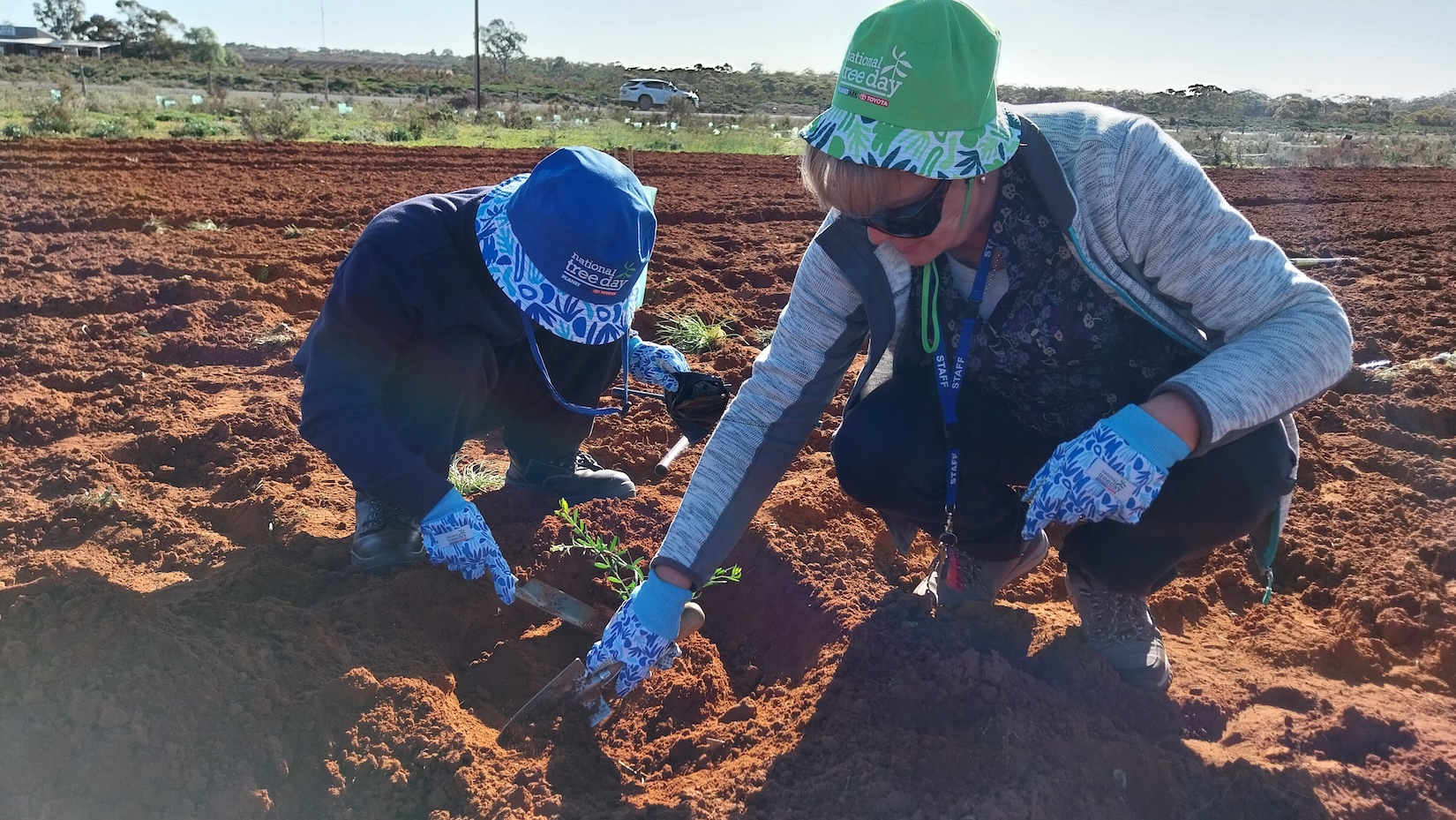
Joining a Landcare group can give you the opportunity to get involved in activities such as tree planting, bushland restoration, habitat protection and community environmental projects.
Landcare is about people coming together to care for land, water and nature. Across South Australia, volunteers, farmers, schools and community groups are taking practical action to create healthier and more resilient landscapes. Learn more about Landcare and how you can get involved.
You can also find a Landcare group near you and discover opportunities to make a hands-on difference in your local area.
Be part of the solution.
Living sustainably isn’t about being perfect. It’s about making practical choices that work for you and building on these.
From reducing single-use plastics and conserving water to getting involved with your local Landcare group, every action can contribute to healthier landscapes, stronger communities and a more sustainable future.
Start with one action today, and together let’s make a positive impact.