

Landcare-led Bushfire Recovery: Rebuilding Resilience Across South Australia
In response to the Black Summer bushfires, the Landcare Association of South Australia Inc. (LASA) partnered with the National Landcare Network, Landcare Australia, and the State and Territory Landcare organisations to deliver the $14 million Landcare-led Bushfire Recovery Grants program. Announced in May 2021 by then Federal Environment Minister Sussan Ley, this initiative aimed to support wildlife and habitat recovery in regions severely impacted by the fires, including Kangaroo Island.
This program funded eight projects on Kangaroo Island, focusing on restoring critical habitats and supporting threatened species. These efforts were part of the Australian Government’s Bushfire Recovery Program for Wildlife and their Habitat.
Learn more about these projects by watching our wrap-up video or reading about each project below.
Agriculture Kangaroo Island Incorporated – Extension of Thermal Assisted Aerial Cull of Feral Pigs on Kangaroo Island.
This project extended feral pig eradication efforts on Kangaroo Island by funding thermally-assisted aerial culling of feral pigs on the western end of the island and has seen the almost complete eradication of pigs on the island.
Removing feral pigs from the recovering native vegetation has resulted in immediate benefits to the recovery of threatened biodiversity.
Read the media coverage of this project on the ABC and in the Islander (subscribers only).
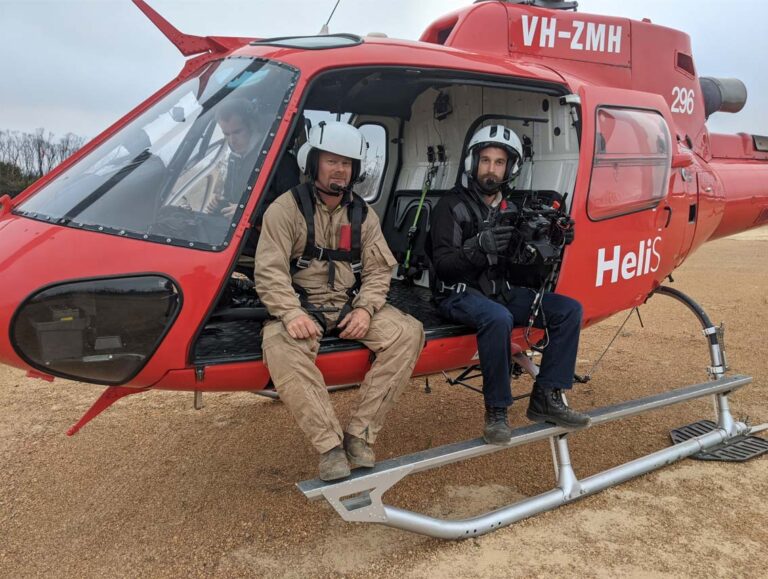
Thermal aerial cull team at start of operation. Left to right, Rob Matthews (HeliSurveys, Senior Pilot), Brenton Florance (KI Landscape Board, Aerial Marksman), Tony Blumson (HeliSurveys, thermographer).
BirdLife Australia – Recovering Kangaroo Island’s Birds after Black Summer Wildfires.
This project has contributed to long-term community monitoring sites, collecting occupancy and abundance rates of post-fire populations of birds across Kangaroo Island, including the Kangaroo Island Emu-wren, Kangaroo Island Whipbird and Bassian Thrush.
For this project, BirdLife Australia partnered with the community and landowners to survey post-fire recovery of Kangaroo Island birds, guiding long-term fire planning and habitat management.
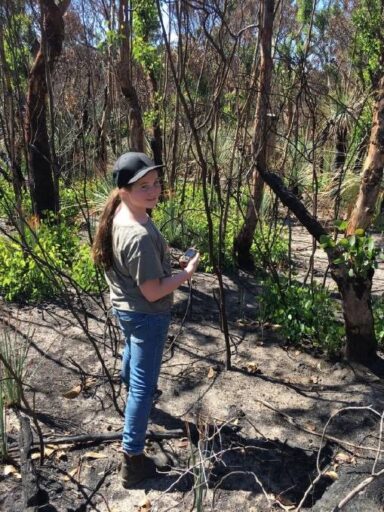
Young student volunteer undertaking a bird survey at a community survey site on Kangaroo Island.
Kangaroo Island Conservation Landowners Association – Habitat augmentation, adaptation and survey of bats and pygmy-possums after Kangaroo Island bushfires.
This project engaged local scientists, landholders, and community volunteers to install, monitor and adapt nest boxes to promote the recovery of seven bat species, and Little Pygmy-possum populations across the Island.
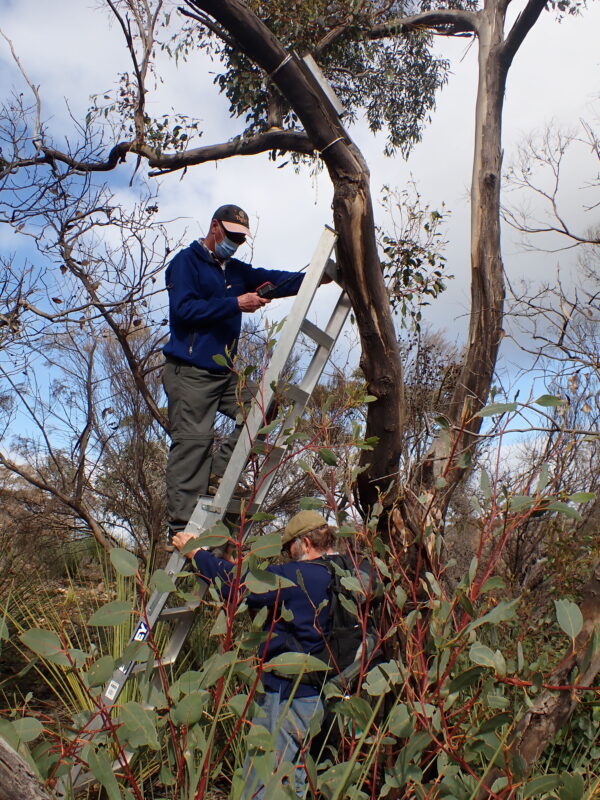
Nest box installation and monitoring. Photo credit. A/Professor Sophie Petit.
Kangaroo Island Land for Wildlife – Felixers for Fire Relief.
This project supported the development of artificial intelligence camera monitoring and deployed Felixer grooming traps in unburnt areas within the 2019/2020 fire scar on Western Kangaroo Island. Feral cat control greatly benefited species, such as the Kangaroo Island dunnart and Kangaroo Island echidna, that were finding refuge within these unburnt habitat patches.
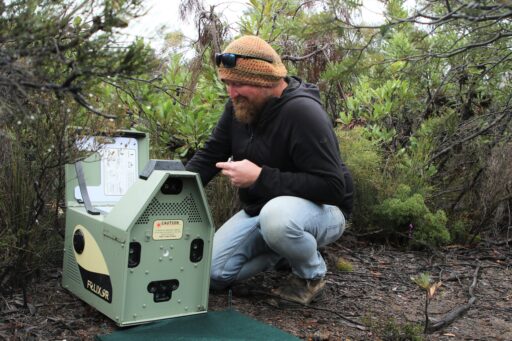
Senior ecologist Pat Hodgens sets up Felixer trap.
Kangaroo Island Landscape Board – A Fighting Chance – Advances in invasive predator control to deliver landscape-scale benefits for post-fire threatened species recovery.
This project utilised large-scale remote monitoring of traps to improve the efficiency of post-fire feral cat control.
The monitoring system complemented existing techniques including cage traps, soft-jaw leg hold traps, thermal imaging assisted hunting, baiting and feral cat detector dogs, to reduce feral cat predation and improve post-fire recovery outcomes for a range of threatened fauna species.
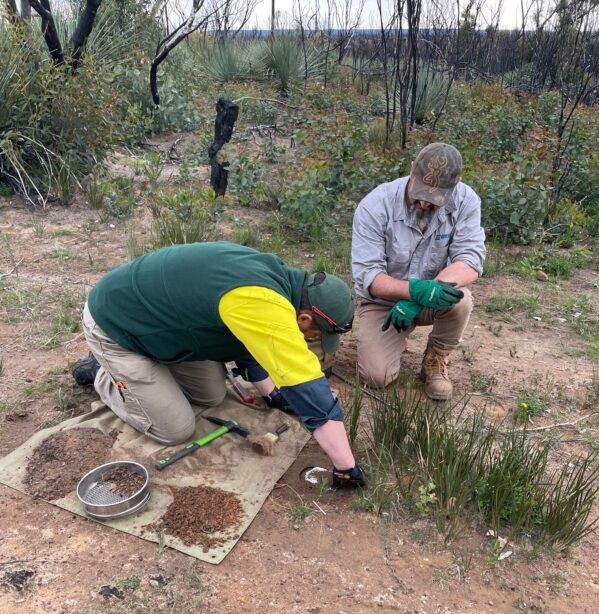
KI Landscape Board project staff setting soft jaw foothold trap.
Kangaroo Island Landscape Board – Deploying baits to control feral cats in forestry properties on Kangaroo Island.
This project delivered broad-scale feral cat baiting to optimise cat control efforts across fire-affected forestry areas of western Kangaroo Island.
The project will suppressed feral cat numbers and complemented existing threatened species fire recovery projects underway.
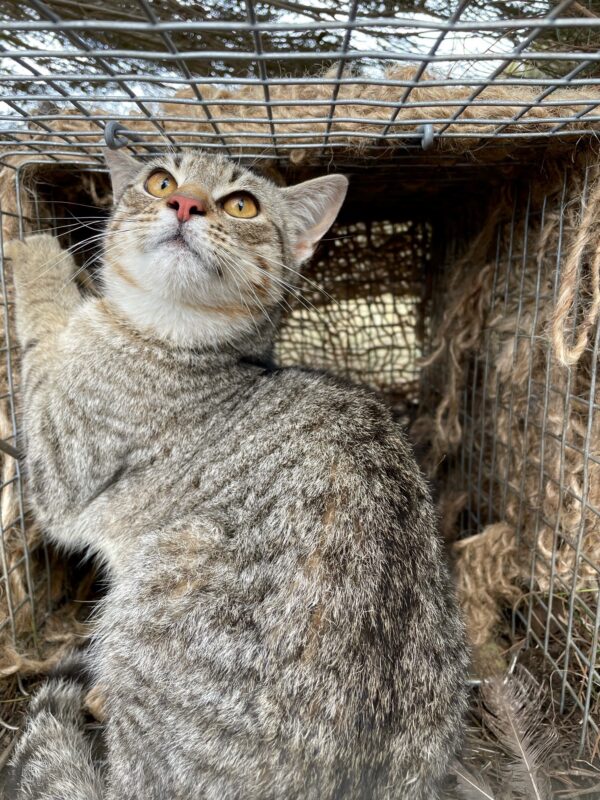
A captured feral cat in a cage.
Nature Conservation Society of SA Inc. – Mobilising and supporting a community-led fire recovery initiative for Kangaroo Islands’ threatened flora.
This project mobilised and supported a community-led initiative to recover threatened populations of fire-impacted flora and to mitigate immediate extinction risks for the most imperilled species.
Activities included assessing, prioritising and addressing post-fire recovery actions, such as seed collection and propagation, and developing a citizen science threatened flora monitoring project.
This project led to the opening of the Island’s first and only Threatened Flora Seed Production Garden, working to secure the future of native flora on Kangaroo Island.
Read more on our news page here.
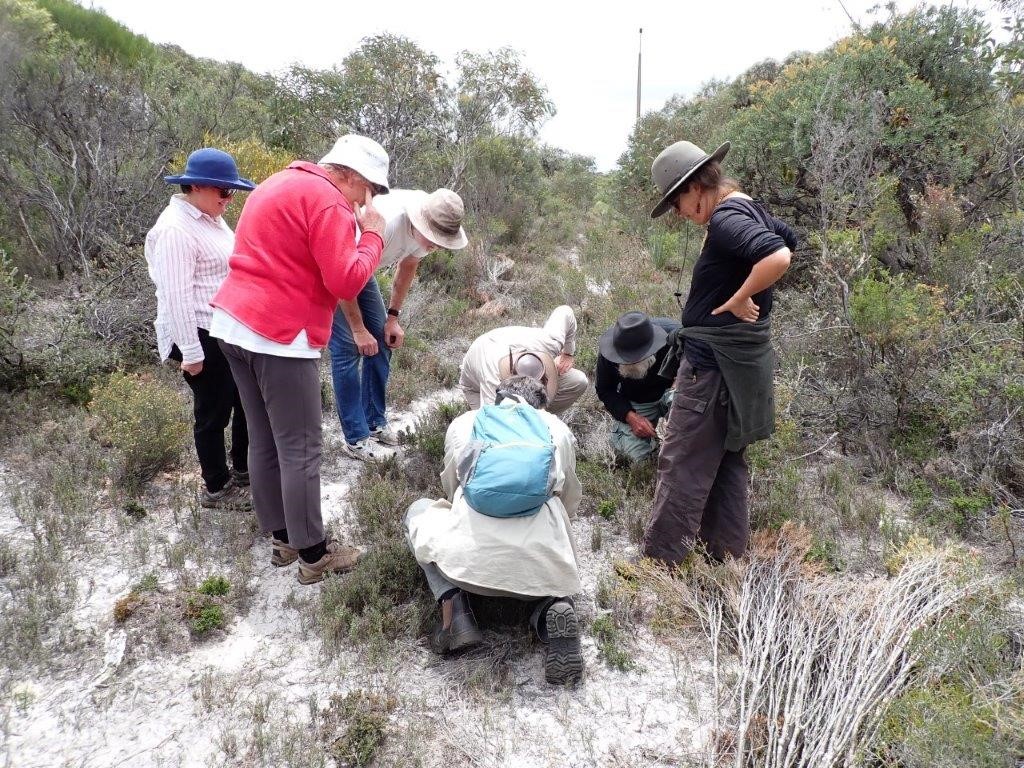
South Australian Museum – Islands within an island: invertebrate species of conservation concern in unburnt refugia within the burn scar on Kangaroo Island
The project conducted surveys for invertebrate species at risk of extinction in unburnt refugia on Kangaroo Island, including the Kangaroo Island Micro-trapdoor Spider and Kangaroo Island Assassin Spider.
Activities included surveys to collect data on distribution in unburnt remnants and threats to post-fire recovery, molecular analyses to delineate species boundaries and distributions, a trial of a DNA collection method and the prioritisation of recovery actions.
Thought extinct, the KI Assassin Spider was eventually found in unburnt refugia, and gained a lot of attention around the world! Read some of the media coverage here, including in the Washington Post, the Guardian, and on the ABC.
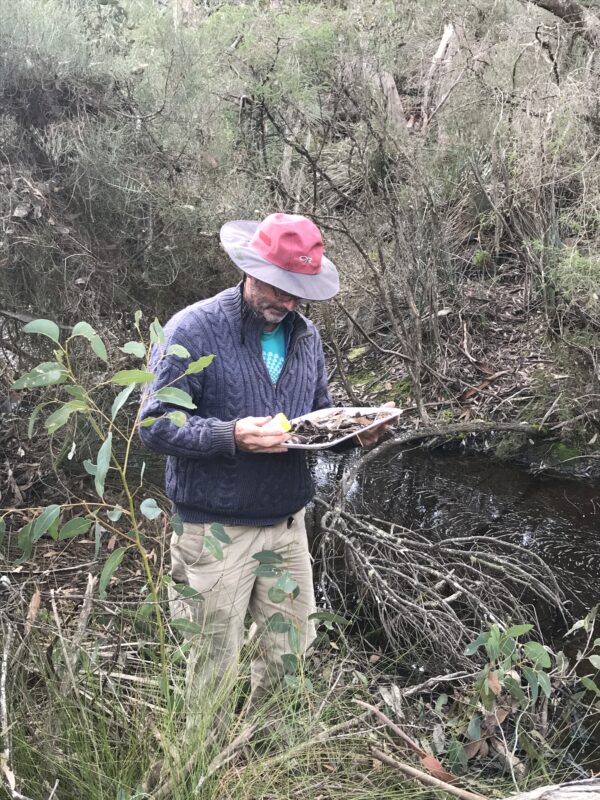
We also funded a Trees for Life and volunteer-led trip to Kangaroo Island to continue efforts to remove invasive Tasmanian Blue Gums, that have exploded in numbers post-bushfires. This species originated on the Island from forestry plantations and threaten to choke out native species.
Click here for more information and stories on Landcare Led Bushfire Recovery Program Projects around Australia.
The Program has been supported by the Australian Government’s Bushfire Recovery Program for Wildlife and their Habitat.